
Turkey launched Operation Olive Branch to clear terrorist groups from its borders. This report demonstrates the link that exists between the PKK and PYD/YPG, the implications of the US support to PYD/YPG and Turkey’s military involvement in Afrin. For the existing link between PKK and PYD/YPG, the report demonstrates that the PYD was established in 2003 upon a direct order from the PKK’s imprisoned founder, Abdullah Öcalan; the PYD/YPG are taking orders directly from the PKK’s ruling elite in the Qandil Mountains in Iraq; thousands of YPG militants fought for the PKK previously, with some of its members even fighting for both organizations at the same time; these groups follow the same ideology, which is evident from the textbooks discovered in the teaching centers of the PYD/YPG in Syria.
OperationOliveBranch.pdf erişimi için tıklayın
This paper analyzes the issue of how Turkey’s border security policy has been shaped since 2013, the year in which Syrian crisis began to deepen and ramify. This analysis draws on interviews with government officials as well as non-governmental organization representatives. So, these parts are included in various sections of the text as much as possible. In the analysis, changes in Turkey’s border security policy in recent years were investigated just after the global and regional divergences in this policy had been addressed. Within the context of the Syrian crisis, the parameters of Turkey’s respective policy, struggle against Foreign Fighters (FF) and the military measures taken were also covered.
20151028162016_analysis_17.pdf erişimi için tıklayın
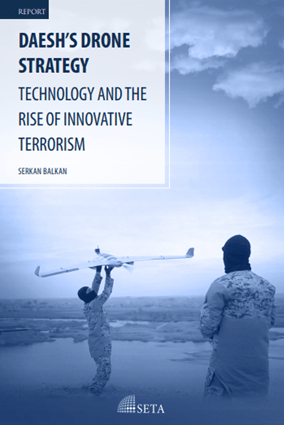
Innovative terrorism” can be described as the introduction of the development of technology by terror organizations. Considering the changing traits of terrorism and the resources owned by terror organizations today, its character and patterns of using innovative terrorism make DAESH the most dangerous organization threatening regional and international stability. Meanwhile, DAESH’s principles of war, terror methods and radical ideology based on Messianic discourse, which is assertive enough to influence masses, transform the organization into the most dangerous actor threatening global peace. Terror organizations take advantage of the opportunities presented by new technologies, globalization and the benefits offered to society by the liberal global markets. This increases the impact of terrorism’s message and the effectiveness of terrorists’ capabilities. This report is mainly about the DAESH’s drone strategy which is conducted during the operations. https://setav.org/en/assets/uploads/2017/08/Report88.pdf
The Mosul Operation will have far-reaching consequences in Iraq and the Middle East. This paper addresses the possible scenarios which might unfold in the post-DAESH era in Iraq and the Middle East. Though the US has a clear role in planning and implementing the operation, we maintain that the Mosul Operation is being launched in a manner that will serve Iran and its Iraqi Shiite allies’ interests. This paper will demonstrate that the Iraqi government has deliberately avoided agreeing to a formula which will empower the Sunni Arabs in Mosul in the post-DAESH era and it intends to restore the regime which was in place before the DAESH takeover in 2014.
MosulAfterDAESH.pdf erişimi için tıklayın

On 9 October, the Syrian National Army and the Turkish Armed Forces launched a joint military operations to clean northeastern Syria from the presence of terrorists organizations such as the PKK/YPG and Daesh. The international community is following the ongoing operation very closely and the motivation, reasoning and the aims of the Syrian opposition and their perspective about the operations, the anti-terrorism campaign and the future of Syria is of utmost importance. The article addresses the perception taking place in the Western media on the Operation Peace Spring.
A297.pdf erişimi için tıklayın
The Syrian War broke out in 2011 as a result of the income inequality and economic recession taking place in the Middle East region. In this report, prepared by TRT World Research Centre, it aims to take a step back and provide our audience with a perspective of what happened in Syria in the last six years. It tells the story of how peaceful protests met with brutality turned into a violent conflict. The first part of the report deals mainly with the political and security aspects of the crisis in Syria. It also covers the rise of extremism and how the entry of various terrorist groups complicated the conflict further. In this regard, Daesh is the most notorious militant organization operating in Iraq and Syria, controlling large territory. Its alleged goal is to establish a caliphate based on its extreme interpretation of religion.
Six-years-of-war-in-Syria.pdf erişimi için tıklayın
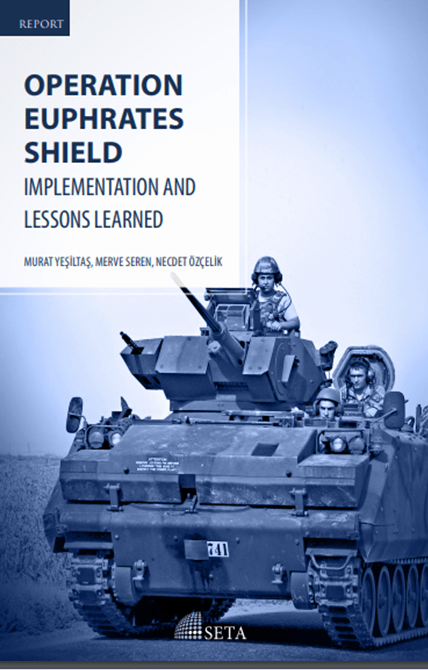
It is a one-year assessment of the Operation Euphrates Shield (OES) launched on August 24, 2016 and concluded on March 31, 2017 and examines Turkey’s future road map against the backdrop of the developments in Syria. In the first section, the report analyzes the security environment that paved
the way for OES. In the second section, it scrutinizes the military and tactical dimensions and the course of the operation, while in the third section, it concentrates on Turkey’s efforts to establish stability in the territories cleansed of DAESH during and after OES. In the fourth section, the report investigates military and political lessons that can be learned from OES, while in the fifth section, it draws attention to challenges to Turkey’s strategic preferences and alternatives – particularly in the north of Syria – by concentrating on the course of events after OES.
R97_Euphrates.pdf erişimi için tıklayın

As a consequence of its fight against various terrorist organizations for more than four decades including ASALA, DHKPC, PKK, and ISIS, Turkey has long been a key actor in terms of global security as well as a key partner in global counter-terrorism efforts. In the last decade, the Islamic State of Iraq and al-Sham (ISIS) has become one of the major security concerns of the international community with the group’s direct military advances especially in Iraq and Syria as well as due to the presence and activities of its affiliates all over the globe. Accordingly, since 2013, Turkey has been an active player in terms of the global fight against ISIS as one of the first countries designating the group as a terrorist organization long before its military advances on the ground.
turkeys-fight-against-isis.pdf erişimi için tıklayın
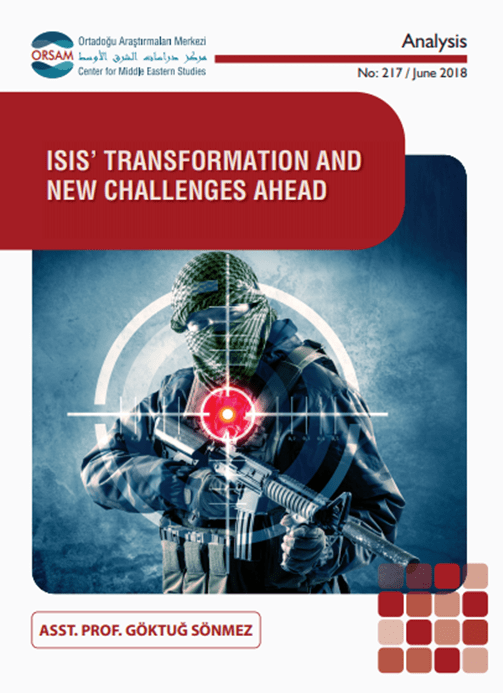
Whereas ISIS suffered from serious territorial losses in the last several years and its propaganda machine has experienced a significant loss of visibility, emerging new questions attract more and more attention. There are no fewer than four key challenges ahead: 1-Perceiving the components of ISIS’ transformation and how ISIS 2.0 will look like 2-Addressing ISIS’ online visibility which significantly diminish but still active and would keep inspiring extremist groups worldwide 3-Detection of returnees and devising proper strategies for them 4-Assessing the post-ISIS 1.0 “competition” over a broad region stretching from the Southeast Asia to sub-Saharan Africa In this study, these four challenges will be looked into in detail. In order to do so, comparisons will be made with the years the group enjoyed the climax of its power.
Analiz_217_eng_1.pdf erişimi için tıklayın
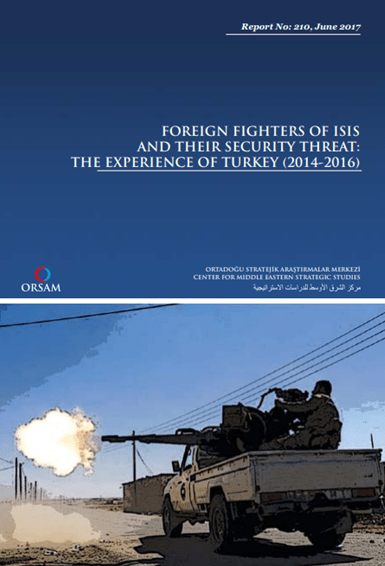
The topic of foreign terrorist fighters is not new in the international security agenda. We have seen it in different times of the world history at different magnitudes. This study is one of the most comprehensive works prepared by ORSAM Security Studies Coordinator Assoc. Prof. Haldun Yalçınkaya on the subject, based on ORSAM’s findings in this field. We express our gratitude to the International Relations Council (UİK), for their help and permission to reprint this report, which was published as an article in the last volume of the Uluslararası İlişkiler journal. This report enables this important study to reach to a wider population. We wish pleasant readings to the people interested in the subject.

Controversies among different groups, these groups’ activities especially in Sunni regions, and Iran’s influence on these groups through the Iranian commanders assigned to Iraq have become the new hot topics in the fight against the ISIS. In addition to detailing the formation process of al-Hashd al-Shaabi, this study offers a detailed account of its structure and the militia groups within this bloc. In addition, this report includes analyses and assessments on the problems regarding al-Hashd al-Shaabi in the current and post-ISIS period. As it is one of the most comprehensive studies in the field in terms of its subject and scope, We hope it will be useful to the readers.
198eng.pdf erişimi için tıklayın

This joint research prepared by ORSAM and TESEV investigates the effects of Syrian refugees on the country’s social structure, economy, politics and security. The study is based on three main observations. First, a considerable number of Syrian refugees in Turkey will either stay in the country for an extended period of time or will live the remainder of their lives in Turkey. Second, based on the first observation, Turkey prepare a comprehensive policy that includes preventative measures to deal with possible negative reaction from the local communities. The third evaluation is related to diversity. If the integration process Works effectively, the Syrian refugee situation might contribute to an enhancement of the multicultural makeup of Turkey.
195eng.pdf erişimi için tıklayın
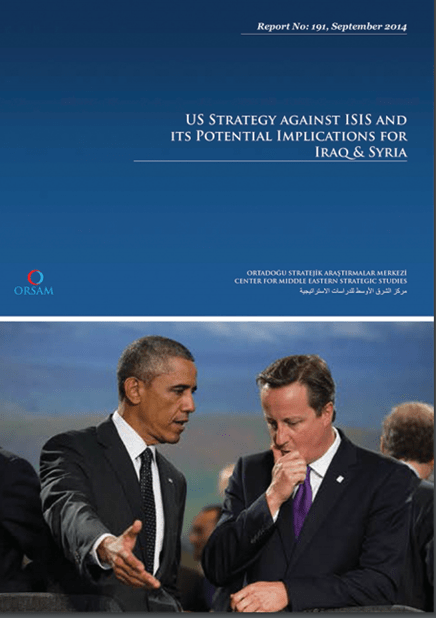
The US started the air strikes against the ISIS targets in Iraq and Syria following the announcement of four pillar strategy by President Barack Obama. The strategy against ISIS would probably had critical impact in Iraq and Syria. As ORSAM, we are presenting a report entitled “US Strategy against ISIS and its Potential Implications for Iraq & Syria” in order to contribute to the ongoing discussions concerning ISIS.
https://orsam.org.tr//d_hbanaliz/191eng.pd
This study aims to become a reference source for those seeking to understand the current situation in Iraq. It analyzes the political situation in Iraq before the elections, the election results and ISIS’s June offensive. Then the report analyzes the background conditions, i.e., the political situation before the elections, as well as their impact on the elections process and the current situation characterized by the ISIS’s June offensive. Finally, the report concludes with the short, medium and long term projections about the situation in Iraq and the scenarios regarding the future of Iraq.
Analiz_190_eng.pdf erişimi için tıklayın
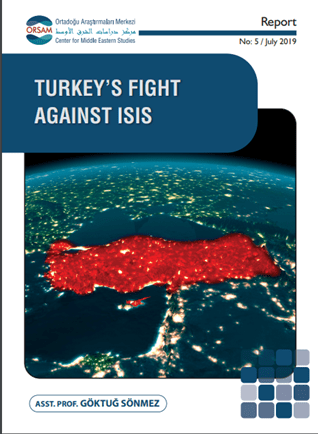
Since 2013, Turkey has been an active player in terms of the global fight against ISIS as one of the first countries designating the group as a terrorist organization long before its military advances on the ground. Within this context, in this study, the group’s emergence and rise as well as its diminishing power and physical presence recently will be discussed. Following that, how Turkey responded to this threat with both hard and soft measures will be mentioned. As two concepts becoming more and more important lately, namely Foreign Terrorist Fighters and “returnees” and Turkey’s measures and performance fighting them will be touched upon. Consequently, the current situation both within and out of Turkey and possible next steps in line with the group’s transformation will be discussed.
turkeys-fight-against-isis.pdf erişimi için tıklayın
The actions of the organization which do not comply with the fundamental Islamic values; the members of the organization with criminal records involved in committing crimes in their homelands; its procurement of services from
the engineers of the very same countries in technical issues all reveal the fact that its true identity cannot be associated with Islam at all
DEASH, the figment of a mindset that aims to polarize the world through religions, shows the image of “fighting against Islam on behalf of Islam”. Actions of this terrorist organization creates an excuse to the global decision-makers for attacking Islam and Middle East at global public opinion. This book has been prepared in line with the aforementioned compulsory grounds.
deas%CC%A7%207%20temmuz.pdf erişimi için tıklayın
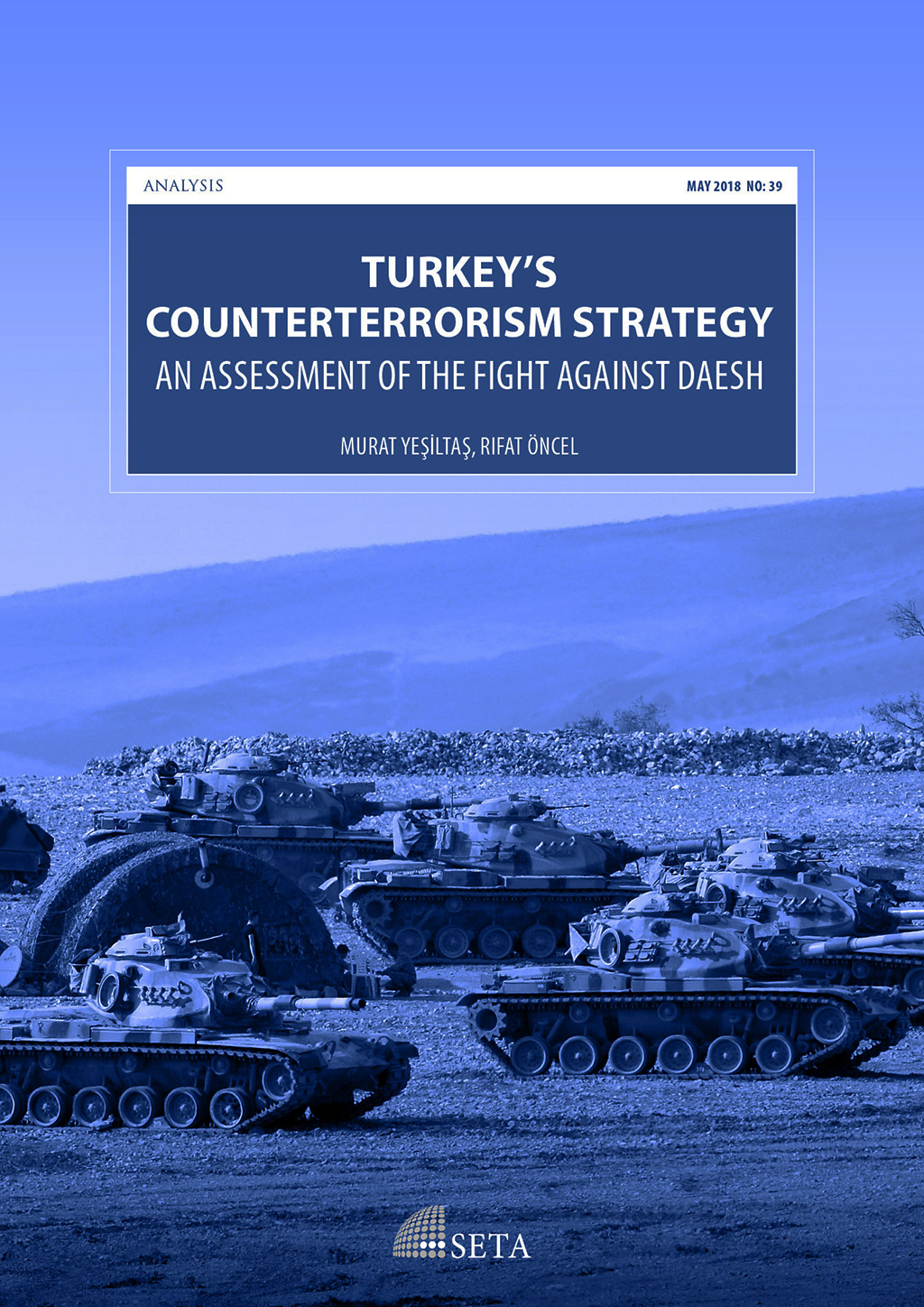
The study argues that specific developments such as the territorial decline of DAESH, the removal of the terrorist group from the borders, enhancements in intelligence and operation fields, and counterterrorism experience ensured the prevention of more terrorist attacks by DAESH terrorists. Consequently, this study proposes that in a post-DAESH setting, Turkey’s national security should be shaped by certain requirements including intelligence superiority, high-level readiness, awareness, and external military activism. Furthermore, it is important that Turkey meticulously examines from the perspective of de-radicalization the possible risks that could unfold from the thousands of DAESH militants detained and currently incarcerated within its borders.
39_Analysis.pdf erişimi için tıklayın
As Operation Euphrates Shield started to push into al-Bab, the characteristics of the conflict have gradu- ally changed. Regional security factors also played an important role in this shift. ISIS’ defensive approach in al-Bab is centered on a terror strategy to increase the burden of the opera- tion, instead of holding and defending the territory. This manner of conduct was widely observed in other defensive encounters of the terrorist group. EDAM’s military analysis of the al-Bab campaign suggests that ISIS’ operational center of gravity rests on a triangle consisting of suicide vehicle-borne im- provised explosive devices (SVBIED), man portable anti-tank guided missiles (ATGM) and subterranean/ tunnel warfare.

This paper outlines current trends in the counterterrorism and counter extremism efforts online. The first section overviews the impact of actions taken by major social media companies, concentrating on content removal, suspension, and deplatforming. The second section explores the evolution of a broader extremist ecosystem online, with an emphasis on its adaptability and multi-layered structure. The third section then discusses the lone-actor terrorism and hate crimes, as well as the overarching connections between online and offline manifestations of violent extremist behavior. The final section surveys the transformation of ISIS’s virtual presence, as it effectively illustrates the dynamic nature and resilience of the outlined security threats throughout the Internet.
Syrian air defenses would be much problematic than dealing with Assad’s fighter interceptors. Furthermore, preventing Damascus’ rotary-wing barrel bomb operations in the adjacent areas would be another concern. Besides, complex MANPADS landscape and hybrid warfare challenges in the region could make the battlespace highly risk for armored incursions, as well as multi-purpose and attack helicopters. Turkey enjoys close basing advantages and its Air Force is well equipped for targeting ISIS elements close to the border areas. However, operational tempo and duration could extremely stress defense economics and intelligence needs for sustaining the target set. Nevertheless, Ankara’s authorization for the use of Turkish bases by the U.S. Air Force would be a tactical game-changer for the course of coalition efforts against ISIS.
 TURKEY'S FIGHT AGAINST DAESH/ISIL