The Arab Spring, started as a non-violent social uprising in 2010 but soon afterwards triggered a violent form of popular demands when faced a repressive response from the Arab governments in the Middle East. Among the root causes of the Arab Spring were wide spread social inequality, the widening democratic gap between the governing elites and the masses, and the structural absence of hope through peaceful and democratic change for a better future. In this order, Syria quickly became a space for popular demand towards change, which met a similar course of repressive response from the authoritarian Assad government. Peaceful demonstrations started in Syria in March 2011. However, after a brief encounter, chaos took hold paving the way for all out civil war on a sectarian basis, triggering mass casualties, internal displacement of the population, and outward migration.
Turkey, with a 911 km-long border neighbouring Syria, is among the countries most affected from the humanitarian crisis in Syria since its outset. In other words, Turkey has a geographical proximity to two countries, Iraq and Syria, which are profoundly affected by the terror threat posed by Daesh. This geographic position leads a situation where Turkey is vulnerable to the negative outcomes at its border and beyond. Not only does its geographic location lead to the refugee flows coming from the other countries, but also it presents a threat for its citizens’ safety. Thus, it has been proactively engaged with this multi-dimensional crisis with a view to help resolving this pressing issue along the following policy guidelines: protection of Syria’s territorial integrity and national unity, ensuring its future decided by its own population and voluntary return of internally displaced people as well as all other Syrian nationals forced to leave their country. In this regard, Turkey’s principal aim is settlement of the problem through peaceful means, with the end purpose of a democratic Syria.

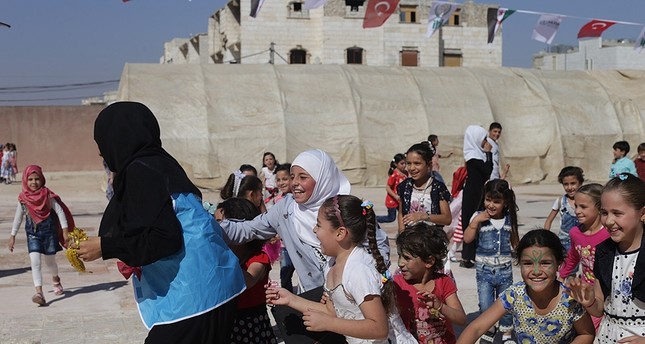
As the tension, social unrest and protests increased and the humanitarian tragedy unfolded in Syria, the Assad Government’s brutal policies gained momentum to suppress the popular discontent by resorting to methods of extreme repression. State violence, in due course, met with armed resistance from the Syrian opposition. Throughout, the Assad government remained indifferent to calls for reform, in rejection of the demands for increased civic and democratic rights. At the early stage of the civilian uprising, Turkey demonstrated a willingness to engage with the Syrian Government, hoping that this could ease off the simmering tension. However, the Assad Government rejected these proposals, and subsequently the Syrian armed forces were deployed to suppress the demonstrations in various cities, which resulted with heavy loss of civilian life, in most cases by indiscriminate and disorderly shootings by the Syrian government forces. This kick started an immense refugee flow to Syria’s neighbours, particularly to Turkey. In spite of logistical challenges, Turkey responded to this humanitarian suffering by allowing the Syrian civilians seeking asylum in Turkey en masse, an approach better known as the “open door policy”. Though this policy did not provide for refugee status to those people fleeing from Syria, within a few months the human flow was already on a trajectory of rapid increase.
As the public disorder vanished and the death toll rose, this humanitarian tragedy reached epic proportions. Turkey, simultaneously became the host for the largest refugee/asylum-seeking population in the world. As of end-2019, the Syrian nationals seeking refuge in Turkey stand at around 3.7 million. In this context, for Turkey, having many provinces sharing borders with Syria, Daesh is one of the most remarkable characteristic terrorist organization as its advancement leads insecurity and instability in the Middle East region and beyond.
Increasing number of people coming to Turkey and uncontrolled irregular migration flow strengthened both lack of border security and the foreign terrorist fighters problem. Further complicating and exploiting this fragile environment is the ISIL/DAESH presence in Syria. The increasing activism of PKK and its Syrian off-shoot YPG/PYG thus created security concerns for Turkey, eventually leading to Turkish military incursions in Syria, per Article 51 of the UN charter. Hence, Operations were launched to curtail and repel the terrorist organizations in Syria. All operations have been conducted by Turkey legally under the UN law. However, it is hard to say the EU and NATO members committed to Turkey’s combating-terrorism activities. PYD, affiliation of PKK, is officially recognized as a terrorist organization by the Turkish government. Therefore, according to the trilateral Astana and Sochi Agreement signed by Turkey, Russian Federation and Islamic Republic of Iran, all of three parties are agreed on the preservation of Syrian territorial sovereignty. Hence, all of these military operations are designed to clear out the land from terrorist organizations, PKK/YPG, and enable Syrian citizens to safely return to their own country. However, Turkey’s legitimate concerns are not appropriately shared with its NATO-ally, the US. Until recently, the US conducted the most menacing wrong strategy: using a terrorist organization to beat another terrorist organization. In this sense, regardless of others’ policies or interests, Turkey’s enterprising and humanitarian foreign policy will conduct Turkey’s military operations until the country is cleared from all terrorist groups and provide a safe hometown for the resettlement of Syrian people.
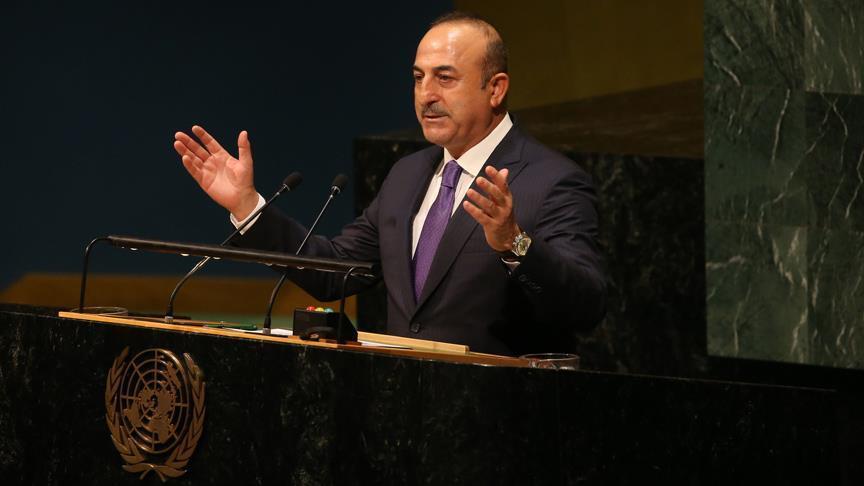
Since outbreak of the terror threat posed by Daesh, Turkey, on both international and national scale, has always aimed to decentralize the nature of this terrorist organization as its broadening network shrinks the maneuvering area for Turkey in the region to provide security and territorial integrity of the neighbor countries. The more radicalization of the armed conflict in Syria is increasing, the more the terror phenomenon rooted by the main driving forces behind intensification in the country is on Turkey’s policy agenda. In other words, Turkey is the country dealing with the root causes at most while the major world powers may not reach the ultimate response until suffering major damage.
Turkey, is one of the most remarkable regions suffering from Daesh attacks and being exposed to Daesh’s ideology because of the two main reasons. First, Turkey is the country sharing the longest border with Deash-dominated countries, particularly Syria and Iraq. Secondly, Turkey is hosting 3.7 million people from the both countries. Therefore, these two main reasons put Turkey into a significant place to be target for Daesh. Daesh is a significant concern for Turkey’s security and stability, as a neigbouring country of Syria and conflict region. The risk, thus, is rooted by not only Turkey’s geographic position but also its neighbours where are heavily dominated by Daesh.
Thus, Turkey has an extraordinary role on fighting Daesh as it has lost hundreds of its civilians. Over the years, Turkey mainly aims to eradicate Daesh from its own soil and the region. However, its strategy can be changed by depending on the different terror attacks organized by Daesh and PYD/YPG. On international, national and regional scale, Turkey has launched military operations, participated in international organizations and formations against Daesh, and pursued a policy to prevent disseminating of this terrorist organization’s ideology and influence. Thus, Turkey has been effectively tackling terrorism with its all forms and ideologies for decades.
 TURKEY'S FIGHT AGAINST DAESH/ISIL